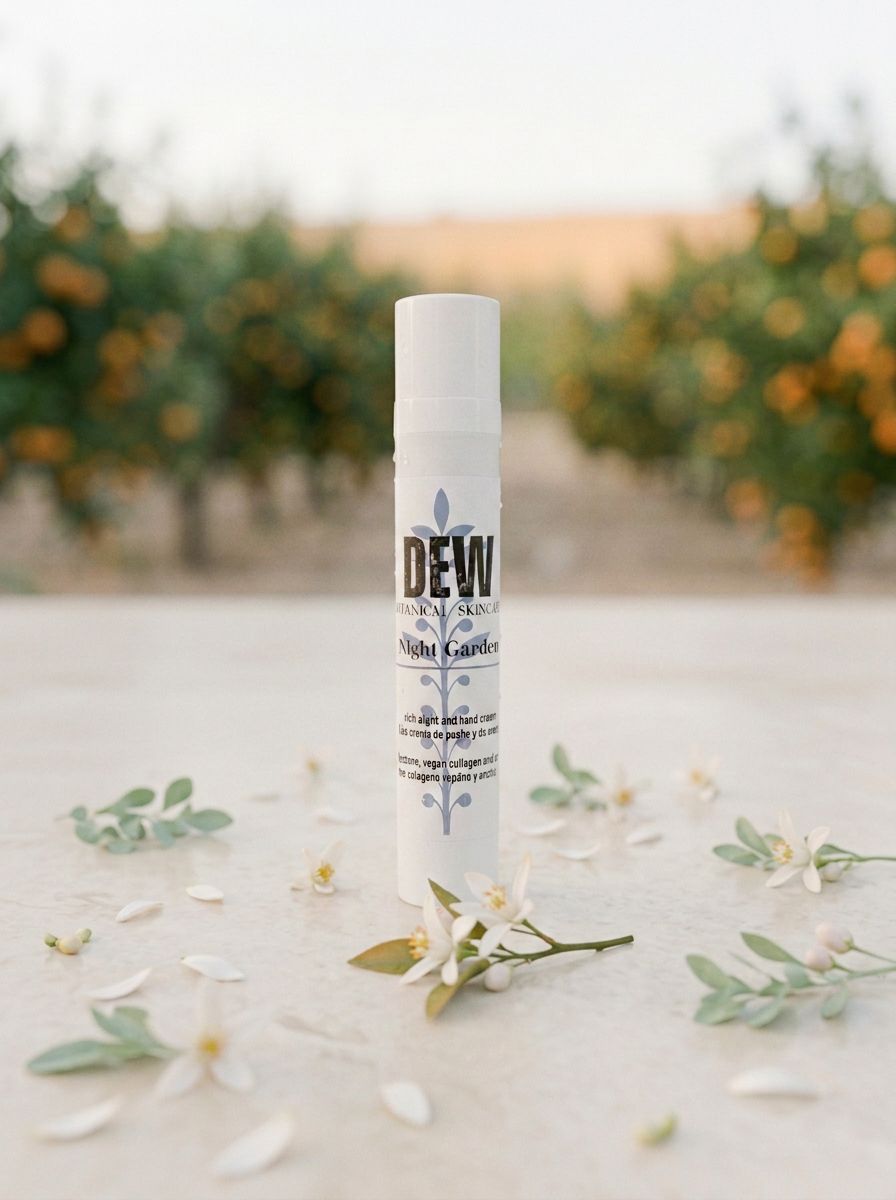
August 2026 · Studio Notes
Why airless bottles ask for patience — how to get the best from your bottle
The first time you press an airless pump, nothing happens. Or sometimes it works for a couple of days and then stops. This is not a fault — it is the bottle needing to be 'primed'.
Airless bottles do not behave like ordinary pumps. There is no dip tube reaching down into the cream, no straw drawing the formula upward. Instead, a small piston sits at the base of the bottle, sealed against the walls. When you press the pump, you create a vacuum above that piston, and the vacuum pulls the product up. Every press lifts the disc a little higher, until the formula reaches the nozzle and the first measured dose appears. Most airless bottles need between ten and thirty full presses before the product begins to flow. Some ask for more. The number is not a sign of poor design. It is the nature of a technical system that keeps oxygen from touching your cream.
We choose airless packaging for the very thing that makes it slower at first. Because no fresh air enters as the product is used, oxidation is kept to a minimum. Botanical actives, plant oils, and natural preservatives stay stable for longer. The piston rises as the cream is spent, so almost nothing is left behind at the end. There is less waste, and less need for synthetic stabilisers. The bottle protects the formula by being slow.
To prime an airless bottle, hold it upright and press the pump fully each time. Release then press again. If the cream feels thick, or if the bottle has been stored somewhere cool, a few extra pumps may be needed. Tapping the base gently against your palm can help the product settle against the piston. If the pump ever stops mid-use, a short round of priming will set it right again.
Patience is part of the ritual. The airless promise: to hold your formula clean, intact, and untouched until the very last drop.